Your students are ready to be at the center. Is your school?
Student-Centered Learning
Shift the Center
The Student Drives. Not the Content.
We redesign learning experiences so students are the engine — not the passenger. Subjects become tools in service of student-led inquiry, not ends in themselves.
Students solve genuine problems for genuine people — not hypothetical exercises. The work they produce is something the world actually needs, not something that ends in a bin.
When students know what they're trying to do — and why it matters — AI becomes a powerful collaborator. We help schools build the curriculum and culture where that happens.
12th graders. Low-cost air purifiers. 1.4M views. CNN. Schools across Bangladesh, Gujarat, Delhi.
0M
Social media reach
CNN
Media coverage
0
Students reached in workshops
0
Countries with active partnerships
FiltAir · Built using the IDI approach.
Vikara Forge
From Passion to Impact.
A guided process that turns student interests into real-world change.
Vikara Forge
1
Discover Purpose
We begin by helping students identify their interests, values, and passions, uncovering what truly matters to them and where they want to make an impact.
2
Define the Problem
Students explore real-world issues connected to their interests and learn to frame meaningful, relevant problems worth solving.
3
Design the Solution
Using design thinking and entrepreneurial frameworks, students develop innovative ideas and project concepts that address their chosen problem.
4
Build & Execute
Students bring their ideas to life, learning project management, iteration, and execution as they launch and develop their initiatives.
5
Create Real-World Impact
We guide students to move beyond ideas and achieve tangible outcomes, impacting their communities, organizations, or target audiences.
6
Refine & Elevate
Students reflect, iterate, and strengthen their projects, focusing on quality, depth, and sustained impact.
7
Tell the Story
We help students articulate their journey, crafting compelling narratives that highlight their growth, leadership, and impact for college applications.
The Outcome
Students don't just build projects. They become change-makers. Instead of being defined by grades alone, they stand out as individuals who take initiative, solve real problems, and create meaningful impact.
Student Voices.
Student testimonial videos in production — check back soon.
In the meantime, read about the FiltAir project in The Work.
What We Offer
Our Services.
Choose the engagement that fits your school's stage of transformation.
01
Innovation Pathway
02
PBL & Experiential Course Design
03
PBL & Experiential Teacher Training
04
Vikara Innovation Forge
Designing the conditions for student-driven learning
What we do
Working closely with school leadership and faculty, Vikara designs and implements a complete innovation pathway tailored to your school's context, culture, and curriculum. The pathway integrates directly with existing IB and AP frameworks, meaning schools gain without sacrificing academic rigor or program coherence.
Who this is for
Schools looking to move beyond traditional course offerings and create a purposeful, visible commitment to future-ready education — whether starting from scratch or building on existing initiatives.
What this includes
Curriculum design and scope and sequence development
Alignment with IB and AP program requirements
Design thinking and project-based learning frameworks
Entrepreneurship and real-world challenge integration
Faculty coaching and professional development
Student assessment models built for innovative learning environments
The Vikara Difference
This isn't a packaged program dropped into your school. It is built with you, shaped by your students, and designed to last.
Building courses where the learning is the doing
What we do
Vikara works alongside teachers and departments to design courses where impact-driven projects are not an add-on but the engine of learning. Drawing on a proven transdisciplinary framework, we integrate design thinking, entrepreneurial mindset, 21st-century skills, and meaningful AI fluency into courses that feel rigorous, purposeful, and alive.
Who this is for
Teachers who feel constrained by traditional course structures and want to build something more meaningful. School leaders who want to invest in faculty capacity and create courses students actually remember.
What this includes
Course architecture and curriculum mapping from the ground up
Project design rooted in real-world challenges and student passions
Integration of the design thinking process across units
UN Sustainable Development Goal alignment for authentic global relevance
SEL frameworks woven into team dynamics, collaboration, and self-regulation
AI integration that empowers rather than replaces student thinking
Assessment design that measures collaboration, creative thinking, communication, and impact
Teacher coaching and co-design throughout implementation
The Vikara Difference
We don't hand you a curriculum and walk away. We build it with you, pilot it with your students, and refine it through the process — the same design thinking approach we teach.
Building the teachers who build the classrooms
What we do
Vikara designs and delivers targeted professional development that meets teachers where they are — whether they are brand new to PBL or ready to go deeper. Training is hands-on, collaborative, and grounded in real classroom application. Teachers leave not with a binder of theory but with a project they have actually designed and the tools to refine it.
Who this is for
Departments or schools ready to invest seriously in teacher growth. Whether you are running a half-day summit, a multi-day institute, or a year-long coaching program, Vikara can design the right experience for your faculty.
What this includes
Introduction to Gold Standard PBL — the seven essential design elements and seven teaching practices
Crafting driving questions that are compelling, open-ended, and standards-aligned
Understanding the difference between doing a project and Project-Based Learning
Designing for authenticity — real audiences, real problems, real stakes
Planning pathways and scaffolding student learning within a PBL structure
Assessment design that measures collaboration, creative thinking, communication, and impact
Multi-disciplinary, interdisciplinary, and transdisciplinary project models
Feedback protocols — tuning, consultancy, and peer critique built into the culture
Ongoing coaching and co-design support beyond the initial training
The Vikara Difference
We train the way we teach. Every session is itself an example of the kind of engaged, inquiry-driven, student-centered learning we are asking teachers to create. If teachers leave inspired, they will inspire their students.
Where students stop imagining a better world and start designing it
What we do
The Forge is an intensive, hands-on program that takes high school students through the full arc of innovation — from curiosity to impact. Using entrepreneurship, design thinking, and project-based learning as the engine, students develop the skills, mindset, and portfolio that make them genuinely stand out — not because they look good on paper, but because they have done something that matters.
Who this is for
High school students ready to move beyond passive learning. Students who have a passion, an idea, or a cause — and want the structure, mentorship, and community to turn it into something real. The Forge is open to any student committed to excellence and social impact.
What this includes
A structured innovation journey from spark to real-world action
Design thinking and entrepreneurial mindset development
Mentorship from IDI faculty, community partners, and industry experts
Signature project or venture design and implementation
Digital portfolio development that demonstrates creativity, critical thinking, and collaboration
Presentation and defense of work to authentic audiences
Recognition pathways — including the IDI Distinction — across four categories: Design & Innovation, Technology, Entrepreneurship, and Service & Social Impact
College and career readiness woven throughout
The Vikara Difference
This is not an enrichment program. It is not a club or a weekend workshop. The Forge is a multi-year journey of inquiry, action, and reflection — the kind of experience that changes how a student sees themselves and what they believe they are capable of.
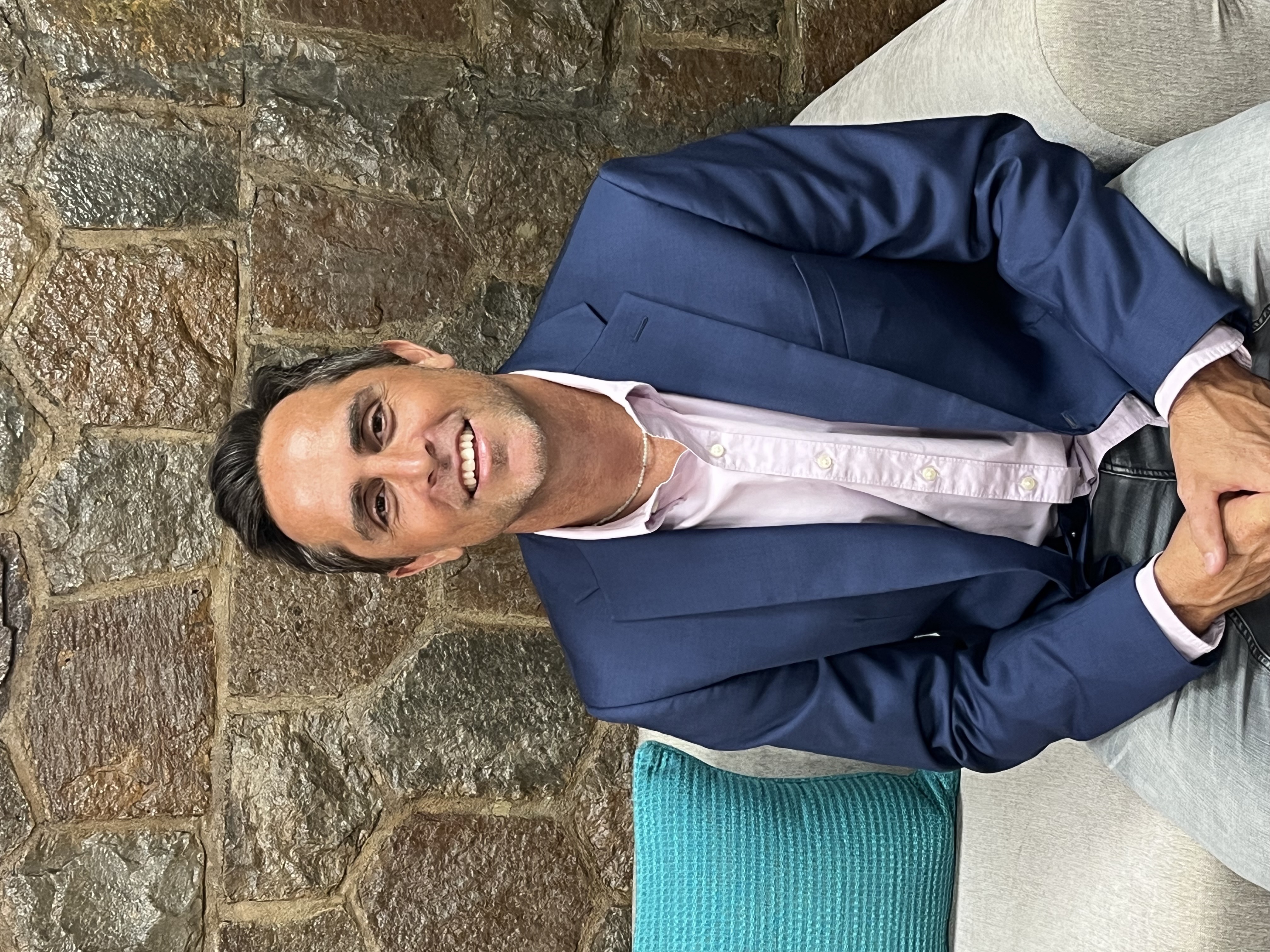
Two educators who've seen what happens when students are given the center.
Sam
IDI Educator
Coordinator for the Institute of Design and Innovation, American Embassy School
For nearly a decade, Sam has been designing and implementing innovative teaching and learning practices. His interest in reimagining education began after watching Most Likely to Succeed, a documentary that explored groundbreaking approaches to course design and assessment at High Tech High.
At Stanford's d.school, Sam explored ways to integrate design and systems thinking into his courses. Building on this work, he partnered with the d.school to develop the Global Sustainability by Design program at Punahou School in Hawaii.
In 2022, Sam earned a Master's in School Leadership from Harvard's Graduate School of Education, focusing on leading change within independent schools. He has had the opportunity to collaborate with Tony Wagner in designing authentic, innovative programs that equip students with the mindsets and skill sets essential for 21st-century learning.
Currently, Sam leads the Institute for Design and Innovation (IDI) at the American Embassy School in New Delhi, where he continues to push the boundaries of student-centered, experiential learning.
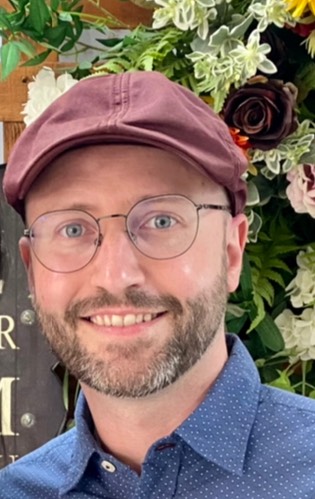
Technology Innovation Coordinator, American Embassy School
With more than 15 years of international teaching experience, Ryan McKinnie is an educator and technology leader whose career has taken him from history classrooms in China to PYP adventures in Lebanon. Now based in New Delhi, he serves as the PreK–12 Technology Integration Coordinator at the American Embassy School, where he helps students and teachers explore the creative possibilities of technology.
Ryan is passionate about blending hands-on learning with digital innovation. At AES, he leads the makerspace and supports technology integration across grade levels, helping students design, code, and create with tools ranging from 3D printers and robots to augmented reality.
By weaving together traditional pedagogy, emerging technologies, and creative problem-solving, Ryan empowers learners of all ages to collaborate, experiment, and build the skills they need for a rapidly changing world. This year, he is especially focused on partnering with IDI students to think outside the box with AI—exploring ways to 10x their impact, scale their service learning projects, and apply an entrepreneurial mindset to amplify innovation and real-world change.
Director of High School Counseling, American Embassy School
Having worked as a university admissions counselor, high school college counselor, IB/AP Coordinator, and Director of Counseling, Warren has spent nearly two decades exploring the links between students, families, and schools at the secondary and tertiary levels as a counselor and school leader.
Currently, he is the Director of High School Counseling at American Embassy School, where he worked to streamline comprehensive counseling services, including post-secondary planning, and supported the launch of the Institute of Design and Innovation, and played an active role in shaping high school policies and procedures.
He frequently presents on a wide range of counseling and secondary school leadership topics, including developing pathways to graduation, best practices in counseling models in international schools, innovative ways to partner with families, and the use of technology and AI. He holds a B.A. in History and Psychology, an M.A. in Education, and is actively pursuing certification in Leadership in Education.
1 / 3
Current Context
What's Shaping Our Thinking.
News, research, and thought pieces that inform the work we do.
AI & Education
Why AI Fluency, Not Literacy, Is The Differentiator
The next competitive edge isn't knowing what AI is — it's knowing how to direct it. Legatt argues that AI literacy has become table stakes, while fluency — the ability to creatively apply, adapt, and critically evaluate AI outputs — is what separates students and institutions that will lead.
The First A.I. High School in the U.S. Is Surprisingly Human
Jessica Grose reports from Seckinger High School in Georgia, America's first AI-themed public high school — and finds that what actually works there isn't the technology, but the human teaching around it. "Schools are not like start-ups, because children's minds should not be tied to the whims of the marketplace."
Harvard's Howard Gardner and Anthea Roberts look ahead to a world where cognitive tasks become optional — and education shifts toward the interpersonal and ethical capabilities machines can't replace. "The need to have everybody in the class doing the same thing, being assessed in the same way, will seem totally old-fashioned."